How To Start a New LARP - Part 5
The Business Side of LARP - Advice From Experts

Introduction
By now, you’ve built the foundation, your concept, your team, your systems, and your players. But before your LARP can truly grow, there’s one more piece that needs attention, the business side.
Even if your goal is community and storytelling, once money, liability, and public events enter the picture, you’re running more than a game, you’re running an organization. Taking the time to set this up properly will protect you, your staff, and your players, and make your LARP sustainable long-term.
Start With a Realistic Budget
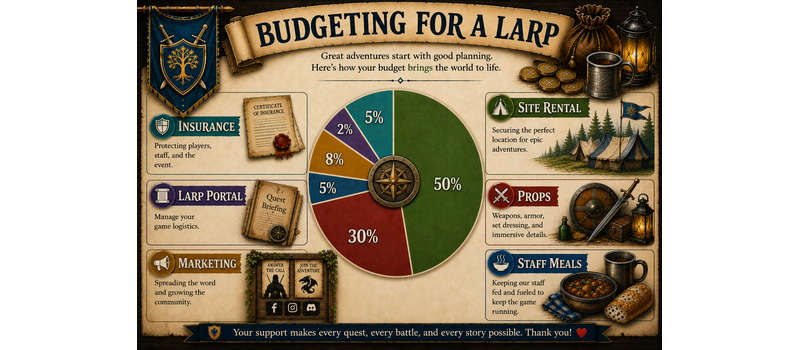
Every LARP has costs. The key is knowing what they are before your first event.
Common expenses include site rental, insurance, props, printing, marketing, and staff support. Some costs are one-time investments, while others will repeat every event or season.
Build a simple budget that outlines expected expenses alongside projected income from player fees. Be conservative; unexpected costs will come up, and it’s better to be prepared than scrambling later.
It’s also worth deciding early how you’ll handle surplus (if you have one). Will it go back into the game? Will it be saved for future events? Will it be used to improve props or reduce costs? Having a plan keeps things transparent and consistent.
Choose the Right Structure
One of the first decisions you’ll face is how to structure your LARP as an entity.
Many groups start informally, but as you grow, forming a legal entity, such as an LLC, can provide protection by separating personal and organizational liability. This can be especially important if you’re handling money, signing contracts, or running events on rented property.
Some LARPs choose to operate as nonprofits, while others remain private businesses. Each option comes with different requirements, benefits, and responsibilities. Take the time to research what makes sense for your goals and scale.
Use Clear Agreements and Contracts
Any time you’re working with a site, vendors, or even staff, clarity matters.
Site rental agreements should outline dates, costs, expectations, and any restrictions. Make sure you understand what’s included and what isn’t; access times, cleanup requirements, and liability terms can vary widely.
For staff, especially if money or responsibilities are involved, having written agreements helps set expectations. This doesn’t have to be overly complex, but it should cover roles, responsibilities, and any compensation or benefits.
If you’re collecting player fees, consider having a simple terms and conditions agreement as part of registration. This can include refund policies, behavior expectations, and acknowledgment of risk.
Don’t Skip Insurance

Insurance is one of the most important, and most overlooked, parts of running a LARP.
At minimum, you should look into general liability insurance. This helps protect your organization if someone is injured or property is damaged during your event. Many sites will require proof of insurance before allowing you to rent.
Depending on your game, you may also need to consider additional coverage, especially if you’re using combat systems or props that carry risk.
It’s not the most exciting expense, but it’s one of the most critical safeguards you can have.
Handle Site Rentals Professionally
Your venue is more than just a backdrop, it’s a business relationship.
Communicate clearly with site owners or managers. Be upfront about what your event involves, including number of attendees, activities, and schedule. This builds trust and helps avoid misunderstandings.
Respect the property. Leave it as you found it, or better. A good relationship with a site can lead to long-term availability, better rates, and more flexibility as your game grows.
If possible, visit the site ahead of time and walk through logistics: parking, bathrooms, emergency access, and any restrictions that might affect gameplay. See our previous blog about What to look for in a LARP Site
Approach Marketing With Intention
You don’t need a massive campaign to grow your LARP, but you do need consistency.
Start with a clear message. What makes your LARP unique? Who is it for? Use that to guide your outreach.
Social media, community groups, and word of mouth are often the most effective tools. Share photos, stories, and updates that give potential players a sense of what your game feels like.
Consistency matters more than volume. Regular updates, even small ones, keep your LARP visible and build anticipation between events.
And remember, your current players are your best advocates. If they’re having a great experience, they’ll help bring others in.
Keep Clean Financial Records
Once money starts moving, organization becomes essential. Track all income and expenses, even if they seem small. Use a dedicated bank account if possible; keeping LARP finances separate from personal funds makes everything easier to manage and more transparent.
Basic record keeping helps with budgeting, planning, and accountability. It also becomes important if you’re filing taxes or reporting as part of a formal entity.
You don’t need complex systems to start. A simple spreadsheet or basic accounting tool can go a long way.
Plan for Growth
The systems you put in place now should support where you want your LARP to go.
As your player base grows, so will your needs: larger sites, more staff, expanded logistics. Thinking ahead helps you scale without losing control of the experience.
At the same time, don’t overbuild too early. Start with what you need, keep it manageable, and expand as your community grows.
Closing
The business side of running a LARP may not be as visible as story or gameplay, but it’s what keeps everything running behind the scenes.
When your finances are organized, your agreements are clear, and your risks are managed, you create a stable foundation for your game. That stability allows you, and your players, to focus on what really matters, telling great stories together.
And that’s what turns a new LARP into a lasting one.
This blog continues our series on Starting a LARP. The series is targeted at players considering running a LARP, but we hope that it is useful for all players, even those that stumble upon it searching for “WHAT is LARP?”.
- Part 1: The Top 5 Considerations When Starting a LARP
- Part 2: The 6-Step Process to Starting a LARP – From Idea to Event
- Part 3: Staffing Your LARP – How To Build a Core Team
- Part 4: The Creative Side of LARP – What Story Do You Want To Tell
- Part 5: The Business Side of LARP – Pointers From the Experts
- Part 6: The Logistics Side of LARP – A Checklist for Success
Call to Action
If you are a game owner or are thinking about starting a game, let LARP Portal simplify your administrative processes and give you and your players more time for LARPing. Contact us at demo@larportal.com today for a free demo.
If you would like to market your LARP and be listed in our Find a LARP search tool, contact us at support@larportal.com. This is a great tool for anyone who is searching for LARPs near me.
Latest Blogs


.png )



.png )